As part of the Professional Experience course, EARTH University students work on projects that connect academic learning with real-world needs, facing technical, production, and market decisions in concrete scenarios.
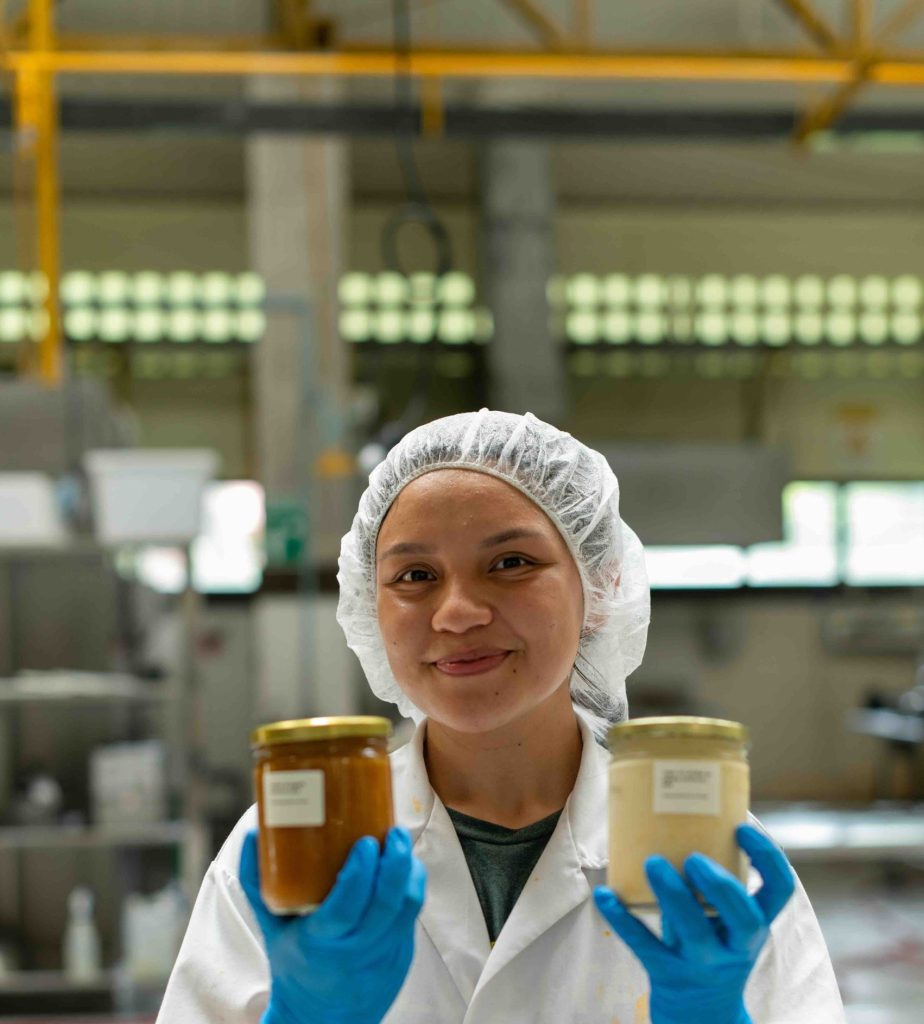
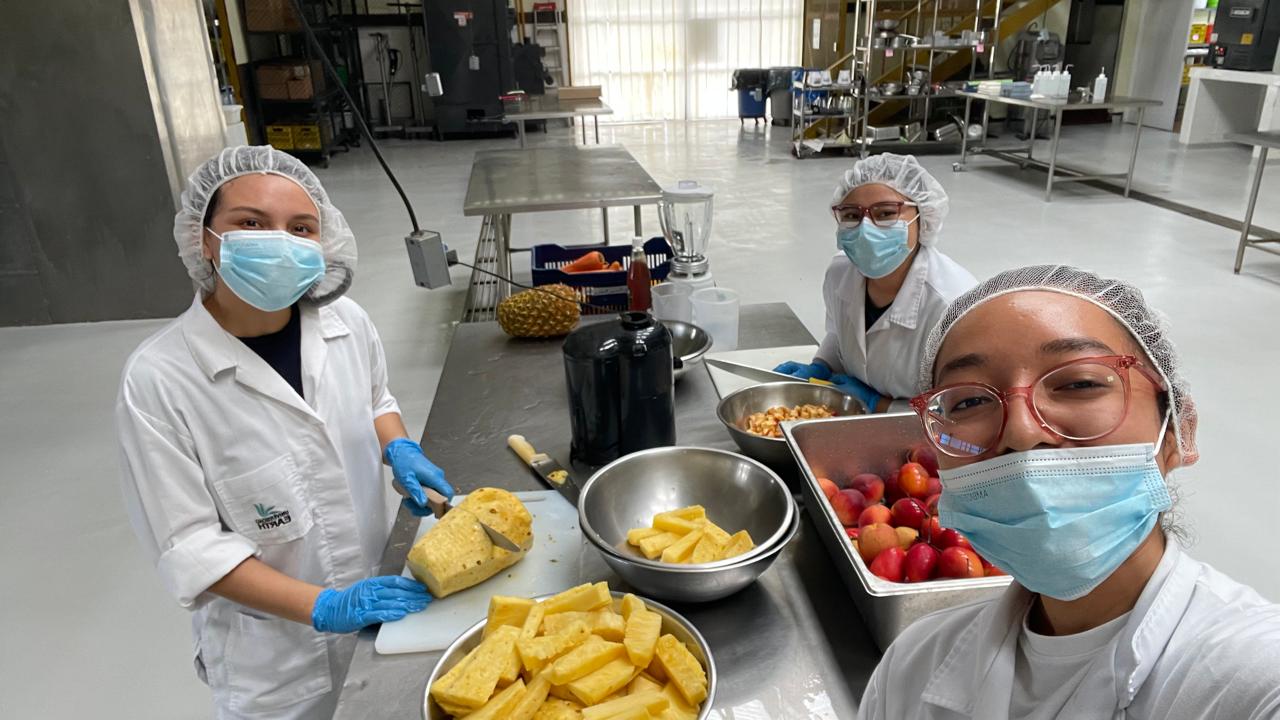
This was the challenge of students Edith Villatoro, Tayra Camel, and Débora Flores (Class of 2026, Guatemala), who developed a proposal to diversify the flavors of artisanal Greek yogurt to support the business OLI LAC. Their experience took place in the Value-Added Processing Facility, specifically in the Learning Scenarios area of the Dairy Plant and the Food Processing Laboratory, where they worked on the design, testing, and refinement of new products.
The project arose from a need identified by entrepreneur Karla Casasola, who produces a type of natural yogurt under the OLI LAC brand in Turrialba, Costa Rica. Karla was looking to take the next step. She wanted to incorporate new flavors developed from raw materials that would allow her to differentiate her product and strengthen her market position. The students’ connection to Karla’s venture was established through EARTH’s Community Development Program (CDP). The proposal was valued as a learning opportunity within the Professional Experience course, as it addressed a specific need of a growing business and would allow the students to develop applied solutions in the area of added value. Additionally, the project opened the possibility of strengthening ties with the business, generating future opportunities for academic collaboration.
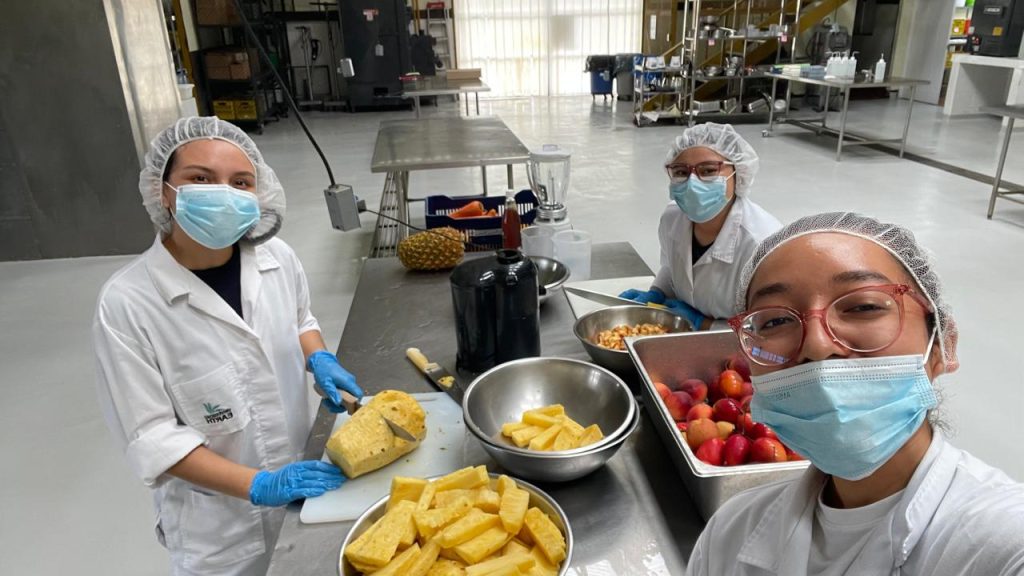
“Karla wanted to start making her own natural flavoring, using raw materials she had readily available,” explains Edith, one of the students who worked on the project. From that point, the team’s work focused on proposing flavor combinations, validating ideas, and adjusting formulations according to the business’s needs, all with the support of professors and area managers, who guided the process and assisted with the technical validation of proposals.
Among the developed flavor combinations were mixtures including peach with tree tomato (tamarillo), plum with blackberry, and a combination of pineapple, papaya and carrot, the latter stood out for also incorporating vegetables into the product. Each option involved multiple tests to achieve the right flavor, texture, and consumer acceptance, understanding that the final result does not always represent the initial concept, but is a process of continuous adjustment and learning.
The process was not limited only to formulation. The students also considered variables such as costs, raw material availability, and market preferences. “It’s not just about proposing a different flavor, but about making it viable for the business and something its target audience will accept,” explains Tayra. Working directly with Karla, the entrepreneur, was a key part of their learning. Constant communication allowed them to adjust their proposals to the business’s needs, understanding that each decision had to respond to a specific production context.
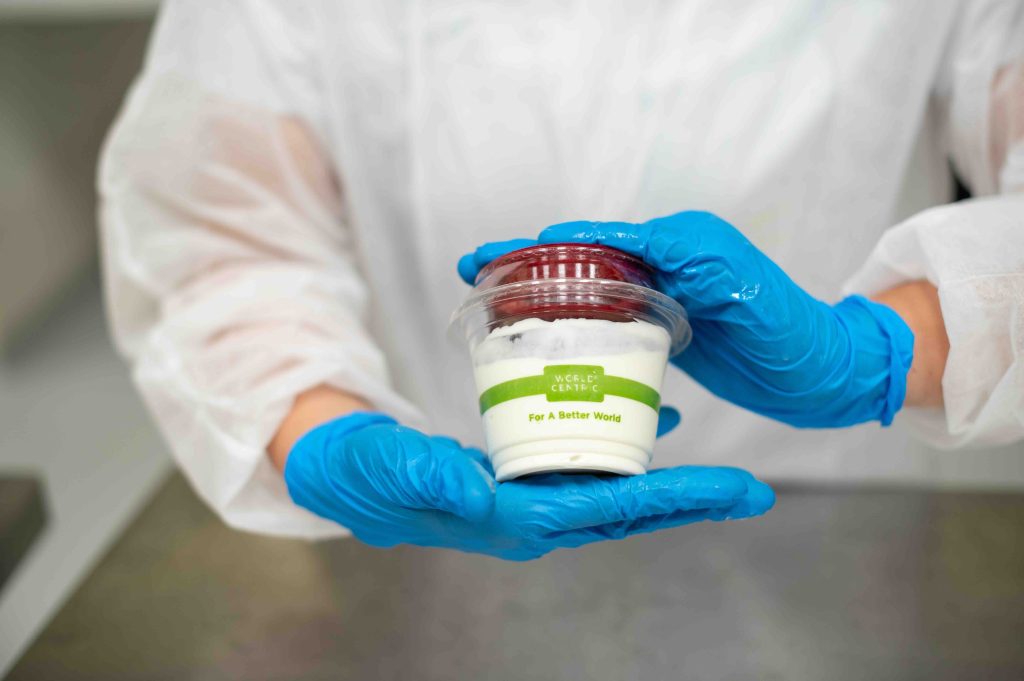
Additionally, the experience involved the use of knowledge acquired in various courses, from concepts learned in Chemistry and Food Processing to raw material management and quality control. “Here everything connects. We have to consider everything from pH value to the quality of the fruit we use,” notes Débora. Teamwork was also fundamental, highlighting skills such as organization and the ability to structure processes so they can be replicated within the business model.
Beyond technical development, the experience had a personal impact. For the students, working alongside an entrepreneur represented an opportunity to contribute to another woman’s journey and to envision their own future projects. “It’s inspiring to see how someone starts and grows, and to be able to be part of that process.”
Upon completing the project, the students validated the flavor proposal with the entrepreneur, with the objective of transferring each of the developed processes so that she can independently replicate them in her business. It is expected that these new proposals will be part of her diversification and added value strategy, strengthening the growth of OLI LAC.
This type of experience reflects how the Learning Scenarios at EARTH strengthen technical knowledge while promoting students’ entrepreneurship skills. Throughout these processes, students develop the ability to identify opportunities, transform resources into value-added products, and make decisions that directly impact business models. This learning allows them to project themselves beyond the University: to one day develop and lead their own ventures in their home countries, generate employment, and contribute to the development of their communities. Thus, the experience becomes a tool to build sustainable solutions for food systems.