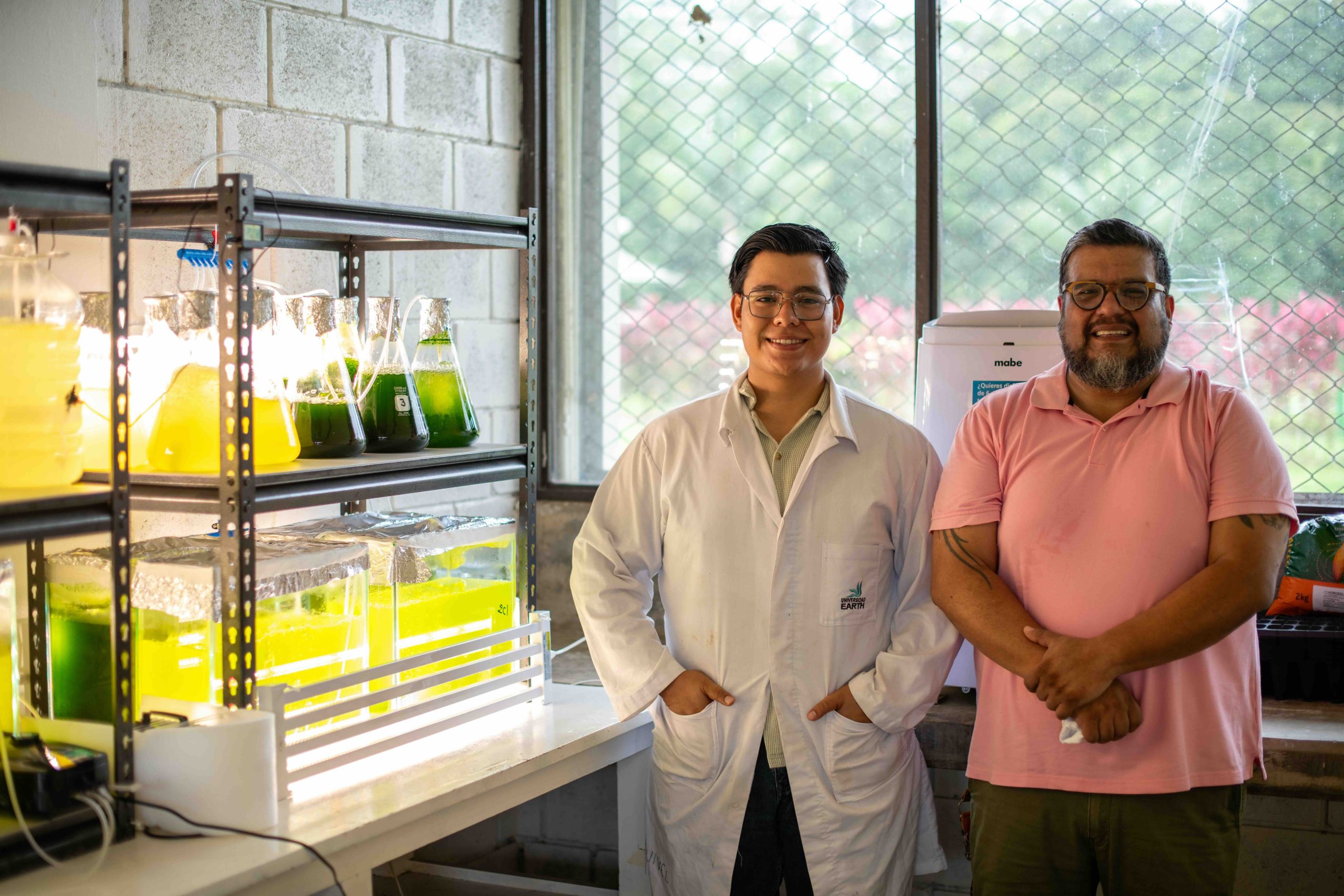
Microalgae are tiny organisms, so small they can be made up of a single cell and are invisible to the naked eye. These microscopic beings have enormous capabilities: they produce a large portion of Earth's oxygen and form the base of the marine food chain. In other words, they are essential for life. Based on this premise, the faculty of EARTH University created BioEARTH, a research, teaching, and innovation platform centered on the use of microalgae and cyanobacteria.
BioEARTH operates under three lines of action: the first relates to using microalgae as agricultural bioinputs, especially as potential biostimulants to improve plant growth or response. The second is linked to using microalgae for animal and human nutrition, considering their value as a source of proteins, pigments, bioactive compounds, or functional ingredients. The third line focuses on phycoremediation, a biotechnology procedure in which microalgae contribute to the treatment and recovery of water with high nutrient loads or organic matter.
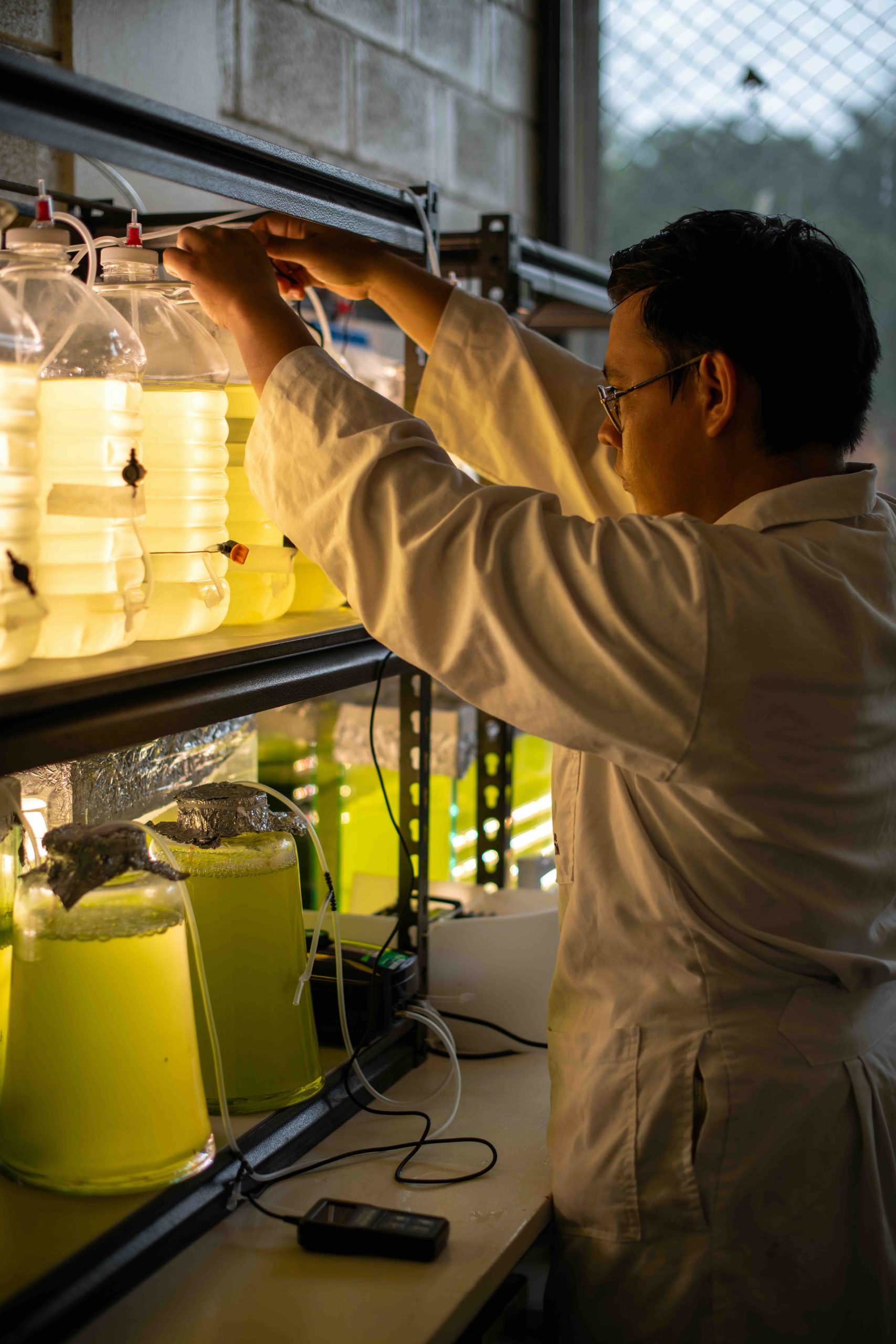
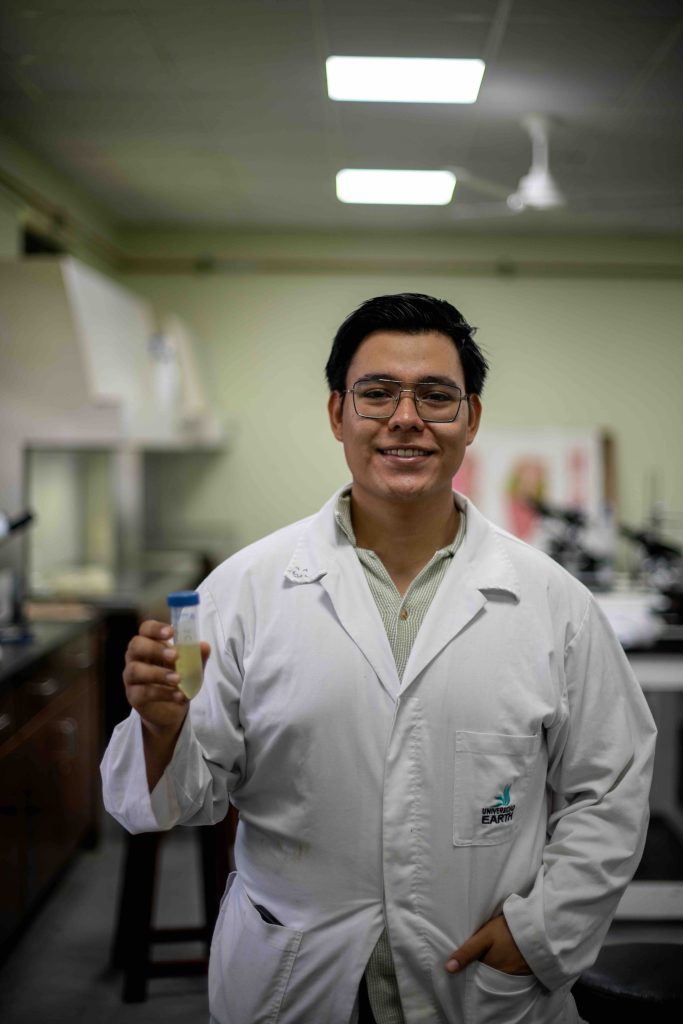
Nelson Esquivel Hurtado (Class of 2026, Bolivia), one of the students who is part of BioEARTH, is working on the third line of action. For his Graduation Project (GP), Nelson is investigating how microalgae can reduce contaminants present in wastewater generated by livestock farming, such as excess nutrients and organic matter. Additionally, Nelson seeks to generate biomass with added-value potential in projects being evaluated by other students and faculty, which can range from biofertilizers to cosmetics or nutritional supplements for animals.
From a young age, Nelson watched his older brother, a chemical engineer, seek sustainable solutions for wastewater treatment in Bolivia, primarily through microorganisms derived from yeast. His brother was a pillar and inspiration for him to dedicate himself to agriculture, with the purpose of researching, innovating, and generating proposals to help small-scale farmers and protect the environment.
“With my research, what we're seeking is to generate information and create a manual that can serve to develop more economical and easier-to-implement treatment systems; we also want the results to be replicable by other people in different contexts,” Nelson explains.
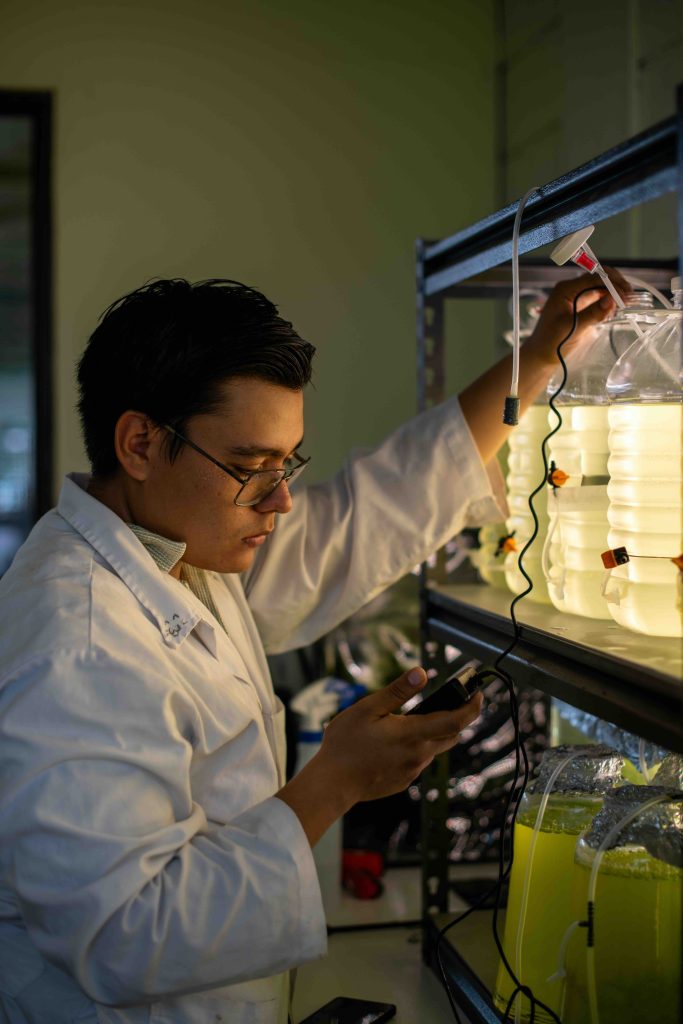
The project is being developed at laboratory scale using a microalgae consortium captured from the rivers on EARTH University's Guácimo Campus. In the current phase of the research, Nelson is working on the reproduction and characterization of these microorganisms under controlled conditions of temperature, lighting, and growth, in order to determine the most suitable means to maximize their nutrient removal capacity. As he explains, microalgae use nitrogen and phosphorus to grow, so they can become a natural tool to reducing wastewater pollution. If the results are positive, microalgae could become a more sustainable and accessible alternative for small and medium-sized livestock producers seeking to treat their water before releasing it into the environment.
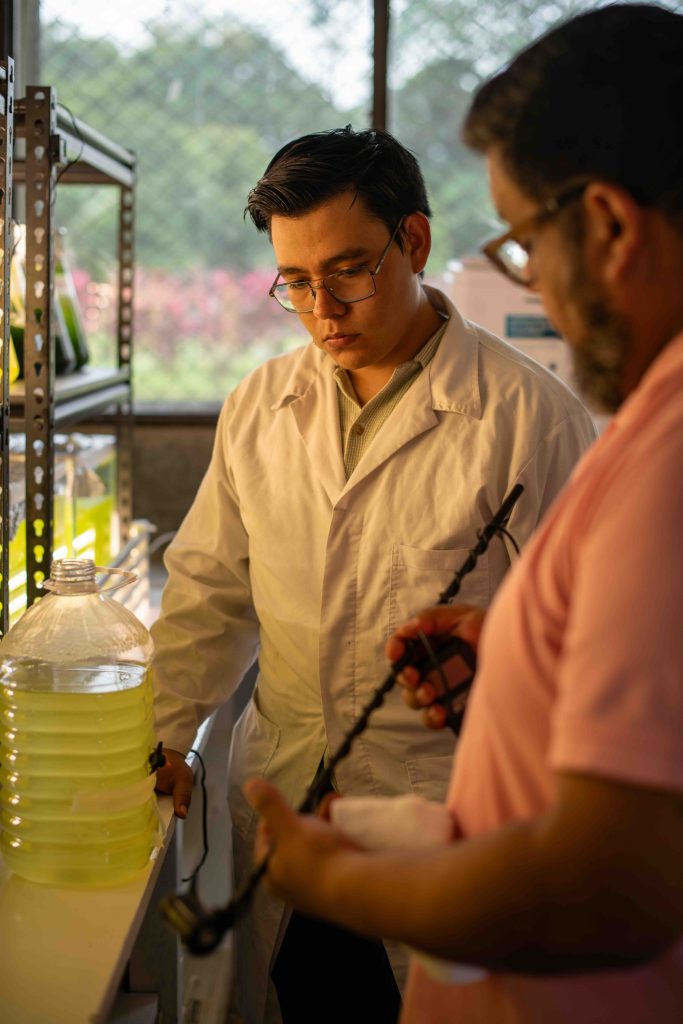
“I think the most beautiful thing about BioEARTH is that it allows us to do science from and for Campus, based on real problems and seeking solutions with an impact on sustainability, production, and the education of our students,” says Nelson's advisor Marcos Decker Franco, Natural Sciences professor and one of BioEARTH's driving forces.
Although the platform is still in a construction phase, the projects it comprises are already laying the groundwork for future research and new applications of microalgae in agriculture, environmental management, and sustainable production.
“We are creating a platform where research is born from curiosity, collaborative work, and commitment to the environment,” Decker adds.