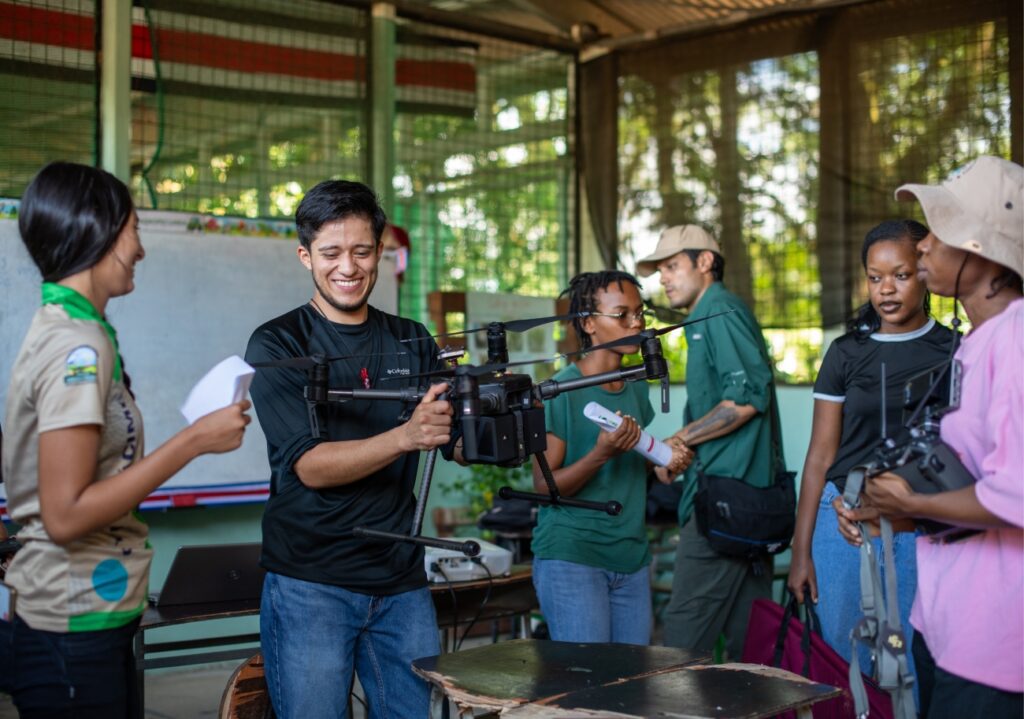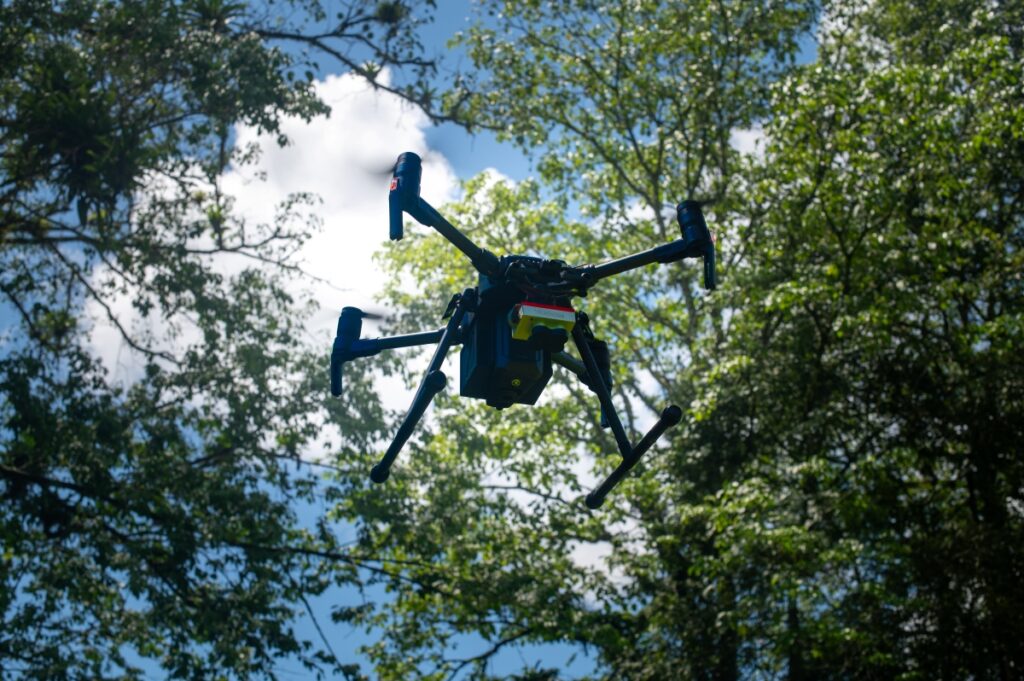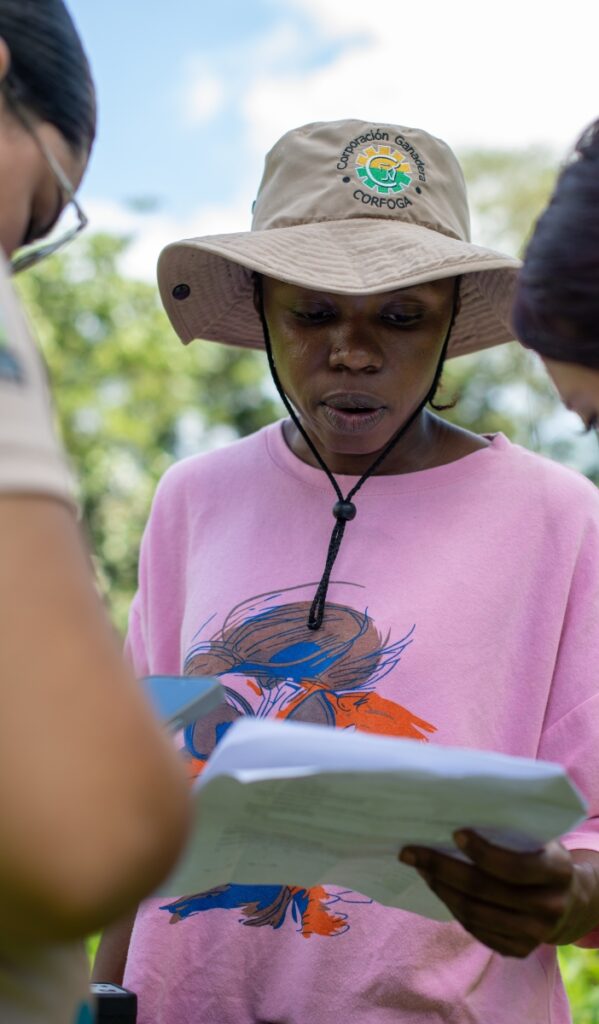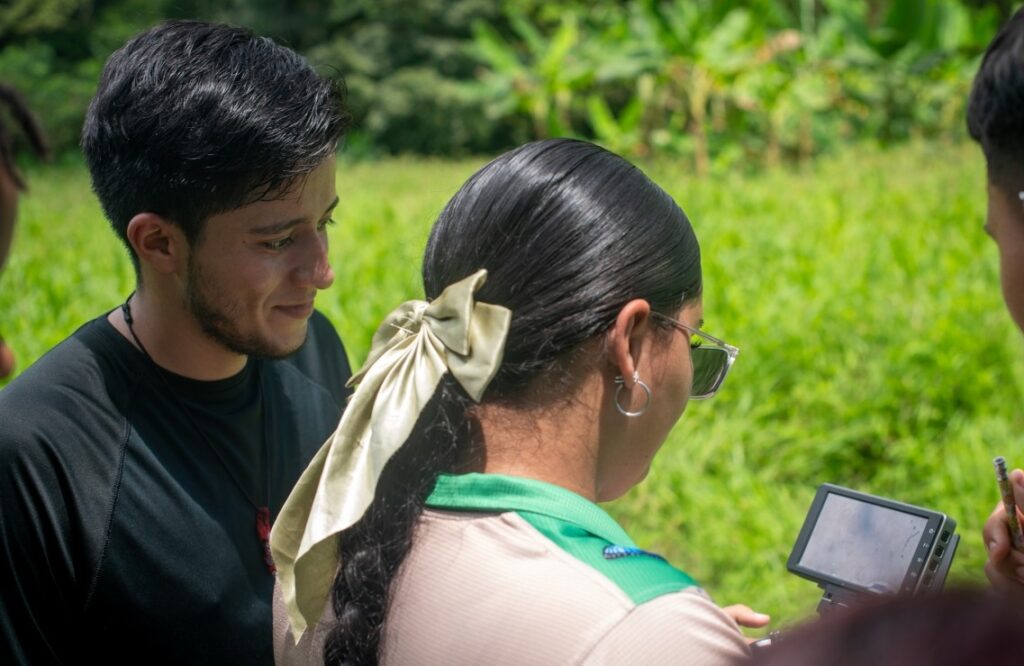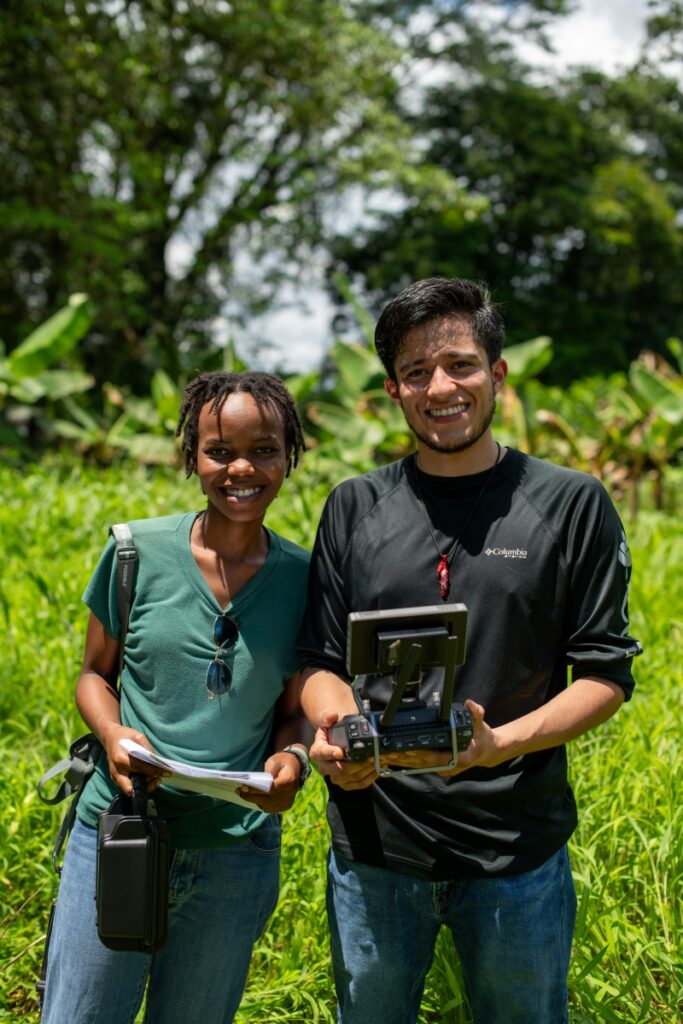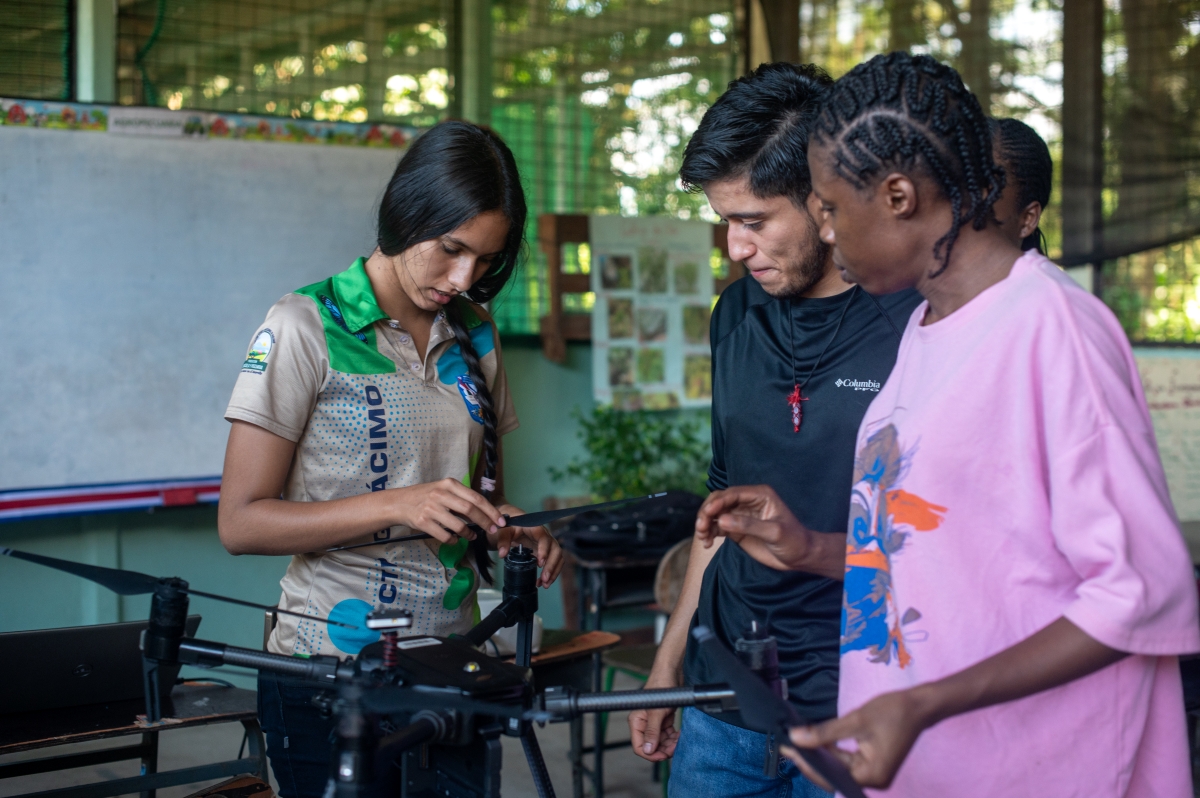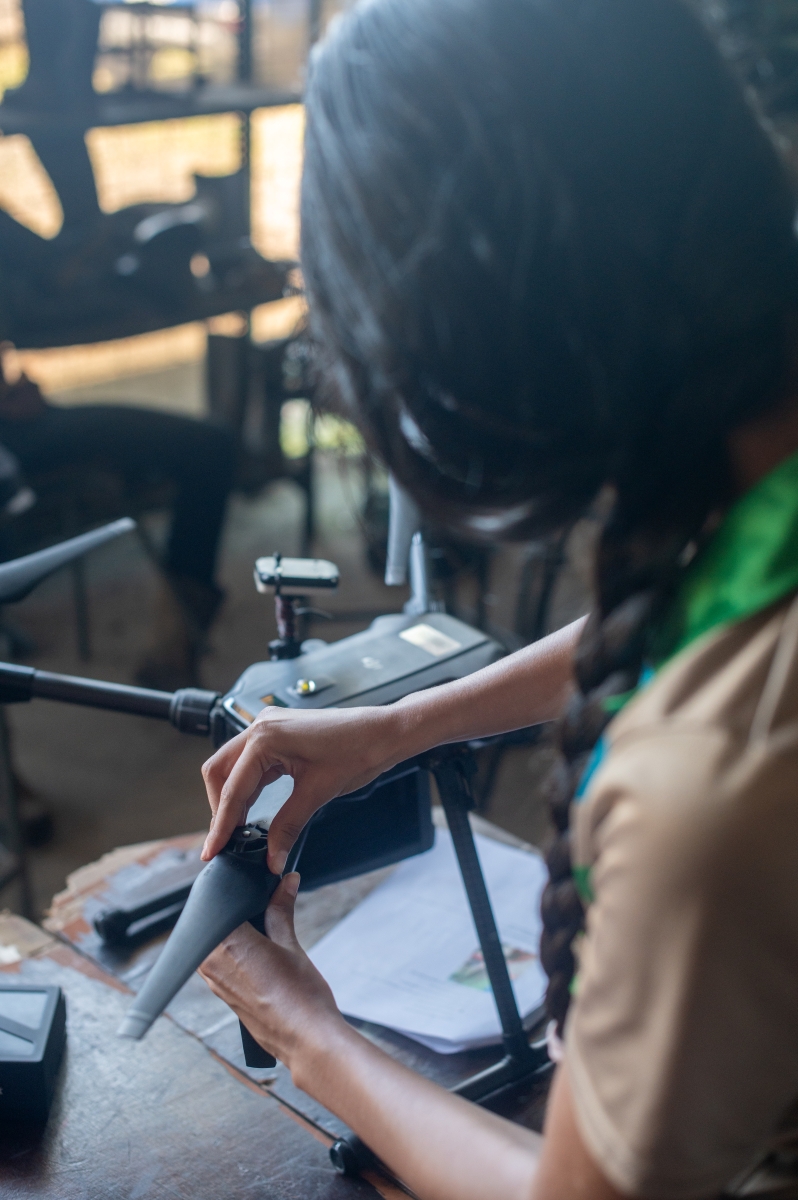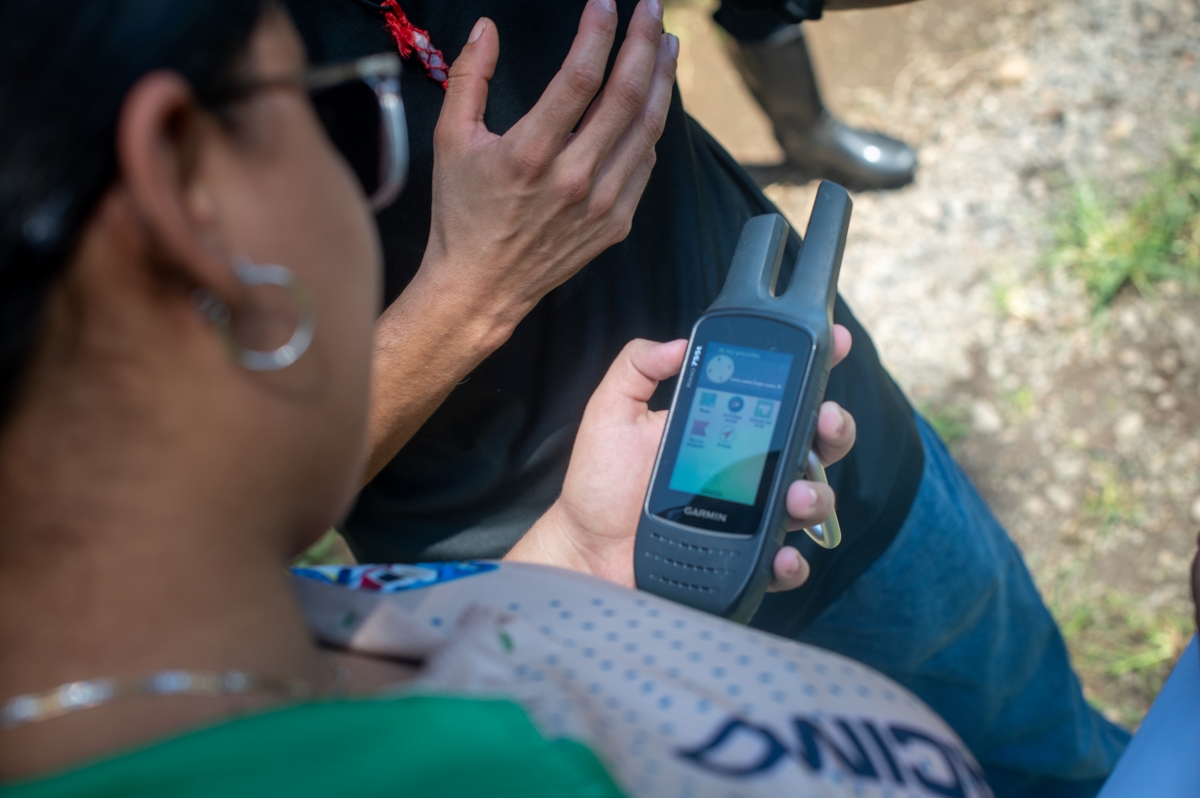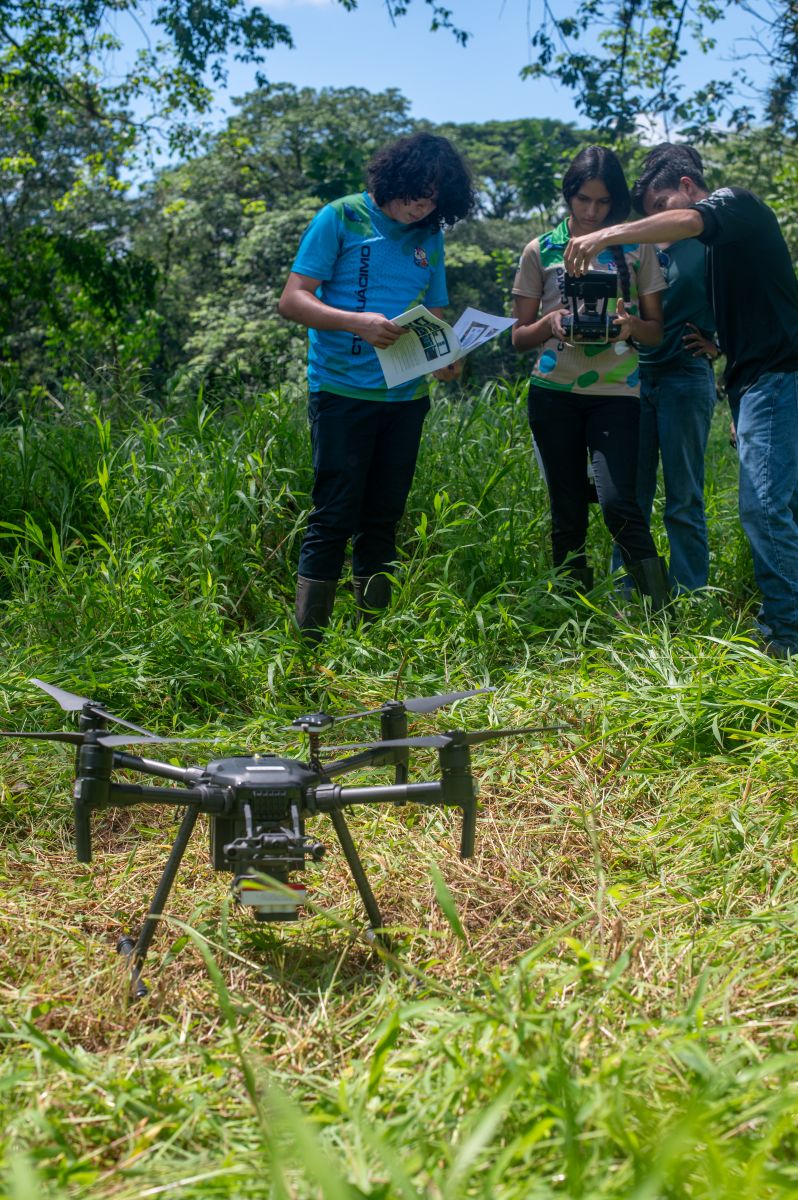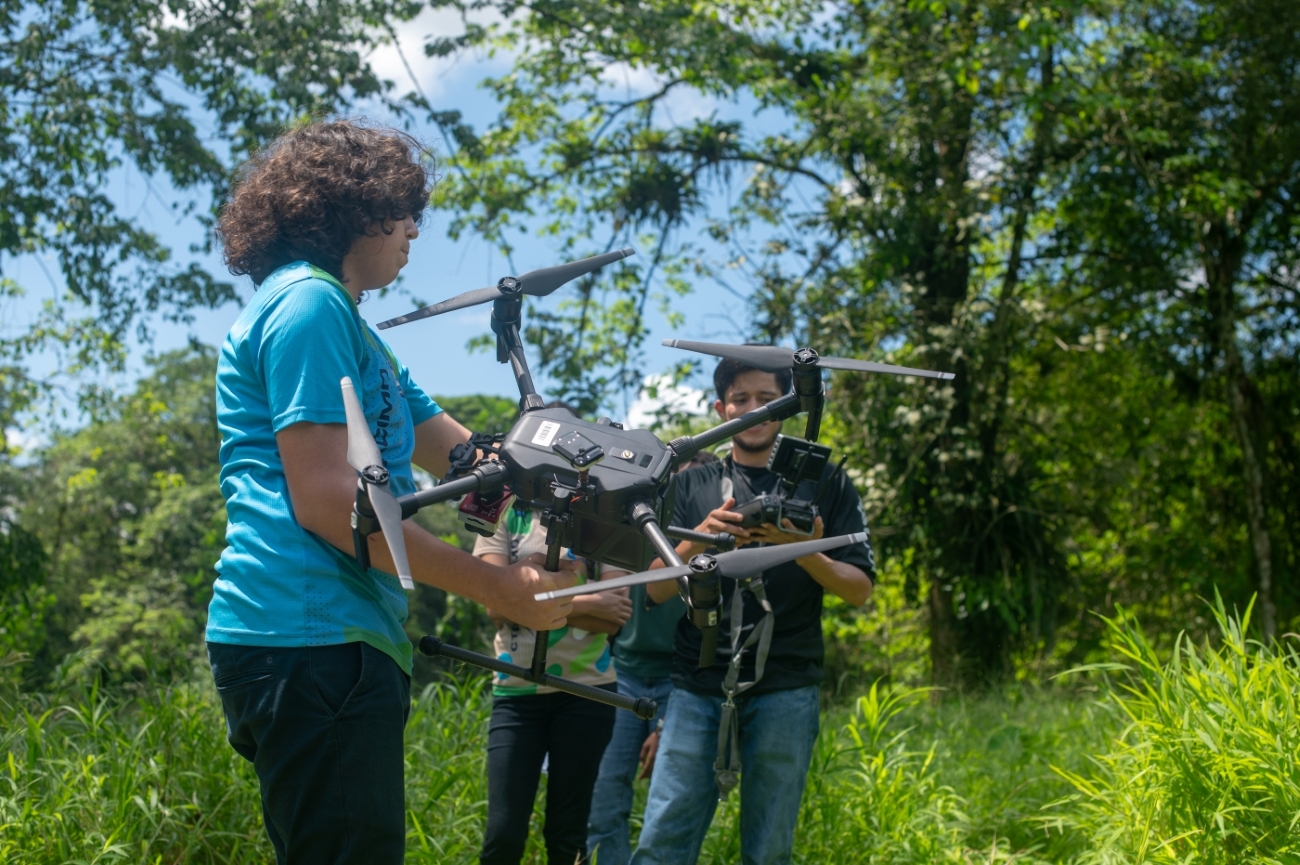
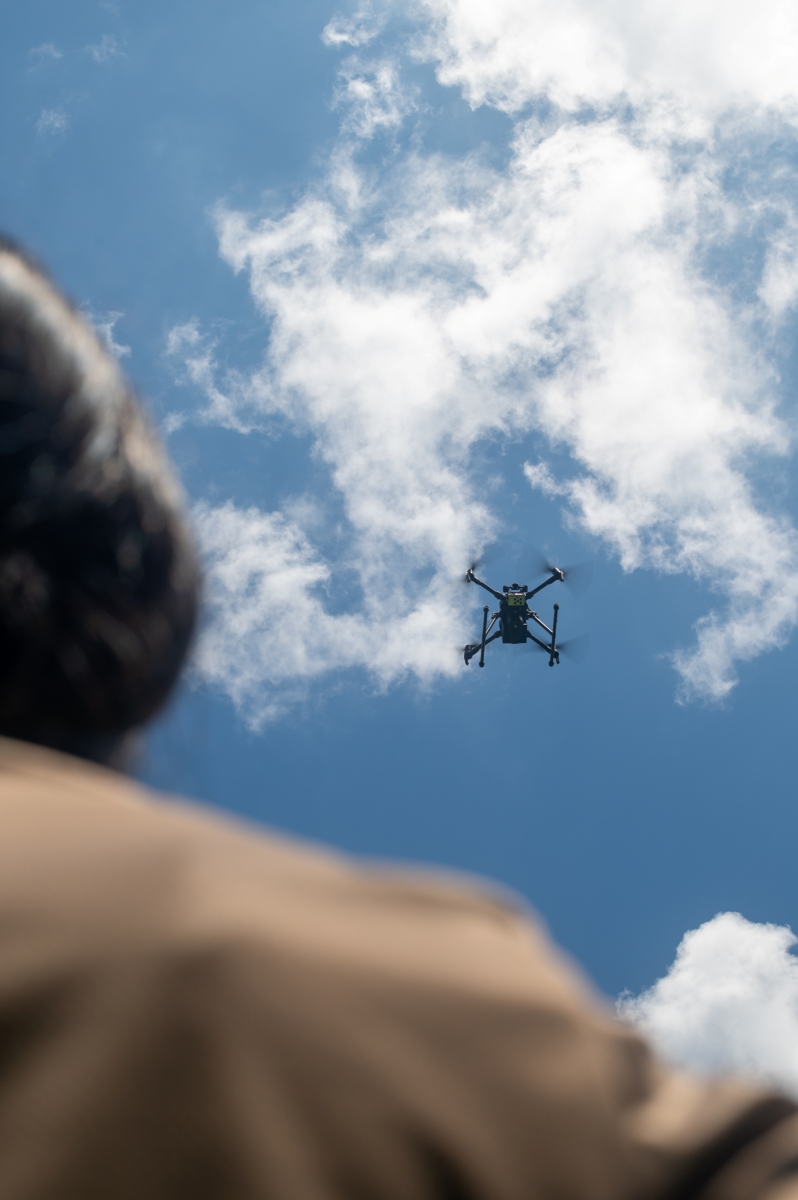
On a cloudless day that intensifies the heat of Costa Rica’s humid tropics, the sounds of laughter and footsteps of restless teenagers fill the hallways of the Guácimo Technical High School (CTP in Spanish). Meanwhile, Eduardo Nicolás Barahona (Class of 2026, Honduras) and Ifeoma Cynthia Ogbu (Class of 2026, Nigeria) are preparing the final details for the lesson they are about to teach to a group of seventh-grade students. Alongside the high schoolers, Eduardo and Ifeoma Cynthia assemble the drone—the star of the lesson—and check the handheld GPS (Global Positioning System) units they will use for fieldwork.
In their fourth and final year at EARTH, Ifeoma Cynthia and Eduardo have stepped into the role of teachers for youth just starting secondary school. This opportunity became possible due to EARTH’s Community Development Program (CDP), a learning scenario that promotes knowledge exchange between EARTH students and members of various communities. As part of the Professional Experience course and the Community Scenario with CDP, students serve as leaders in various settings during their fourth year. Eduardo and Ifeoma Cynthia competed for two of the 17 spots managed by the CDP for the Community Scenario, in their case, working in high schools surrounding the Guácimo Campus.
“Communication skills are very important for agronomists. We need to know how to carry ourselves and speak without the fear of making mistakes. Plus, it’s a practical way to put our knowledge into action, to share what we have learned at EARTH with different high schools, and make not only a social contribution, but a contribution to students who need or want to learn about this,” Eduardo emphasizes.
The CDP aims to equip students with the ability to respond to realities outside the classroom, make conscious decisions, and resolve conflicts. The partnership with technical high schools was established in support of Costa Rica’s Ministry of Public Education (MEP in Spanish) and its program on technology applied to agriculture. After many rural high schools received drones, teachers needed training on how to operate them. EARTH developed a workshop proposal for educators that eventually evolved into a guide for students as well, all coordinated with school administrations. Today, the Community Development Program is active in four high schools across the cantons of Pococí, Guácimo, and Siquirres, all in the province of Limón, with the latter two receiving precision agriculture classes, including drone operation.
“It is important for students to understand how vital precision agriculture is in today’s world. We want to produce more and know what is happening on our farm, in the field, without relying so much on strenuous manual labor. This helps us understand the different decisions we need to consider in the field to prevent damage or loss, and to avoid things that can affect us economically or physically on the farm,” explains Ifeoma Cynthia regarding the value of EARTH students bringing knowledge to rural secondary schools.
During 2026, 80 EARTH students carried out initiatives in high schools across Pococí, Guácimo, and Siquirres through the Community Development Program. Around 150 secondary school students benefited, receiving lessons and training across various topics, including agricultural technology.
In their role as leaders in these classrooms, Ifeoma Cynthia and Eduardo also faced challenges. The Guácimo CTP, much like the rest of the country, received its drone several years ago, meaning the technology is slightly outdated. Weather conditions have also affected some lessons and flight plans. At the end of the year, the high schoolers will visit EARTH’s Guácimo Campus to review the data and results using specialized software to understand how field decisions are made based on that information. Both sides are pleased with the progress made and the objectives met as part of their work plan.
“This year we are wrapping up with drones and GPS, and this term we are focusing mainly on TDR (Time-Domain Reflectometry) in moisture sensors. The high school students have already gained knowledge that is essential before flying a drone, as well as other factors they need to keep in mind when using GPS,” Ifeoma Cynthia highlights.
“Using the drone is a way to show students what agriculture is and what data we need, for example, moisture. They understood perfectly how photosynthesis works by talking about TDR (Time Domain Reflectometry) moisture sensors. We discussed different moisture gradients and how evaporation can help plant stomata open in the mornings to take in that moisture,” Eduardo details regarding the growth and learning of the high schoolers.
“I have developed patience with the students. I feel I can express myself better, and I appreciate having stronger lesson-planning skills,” he adds about his personal and professional growth.
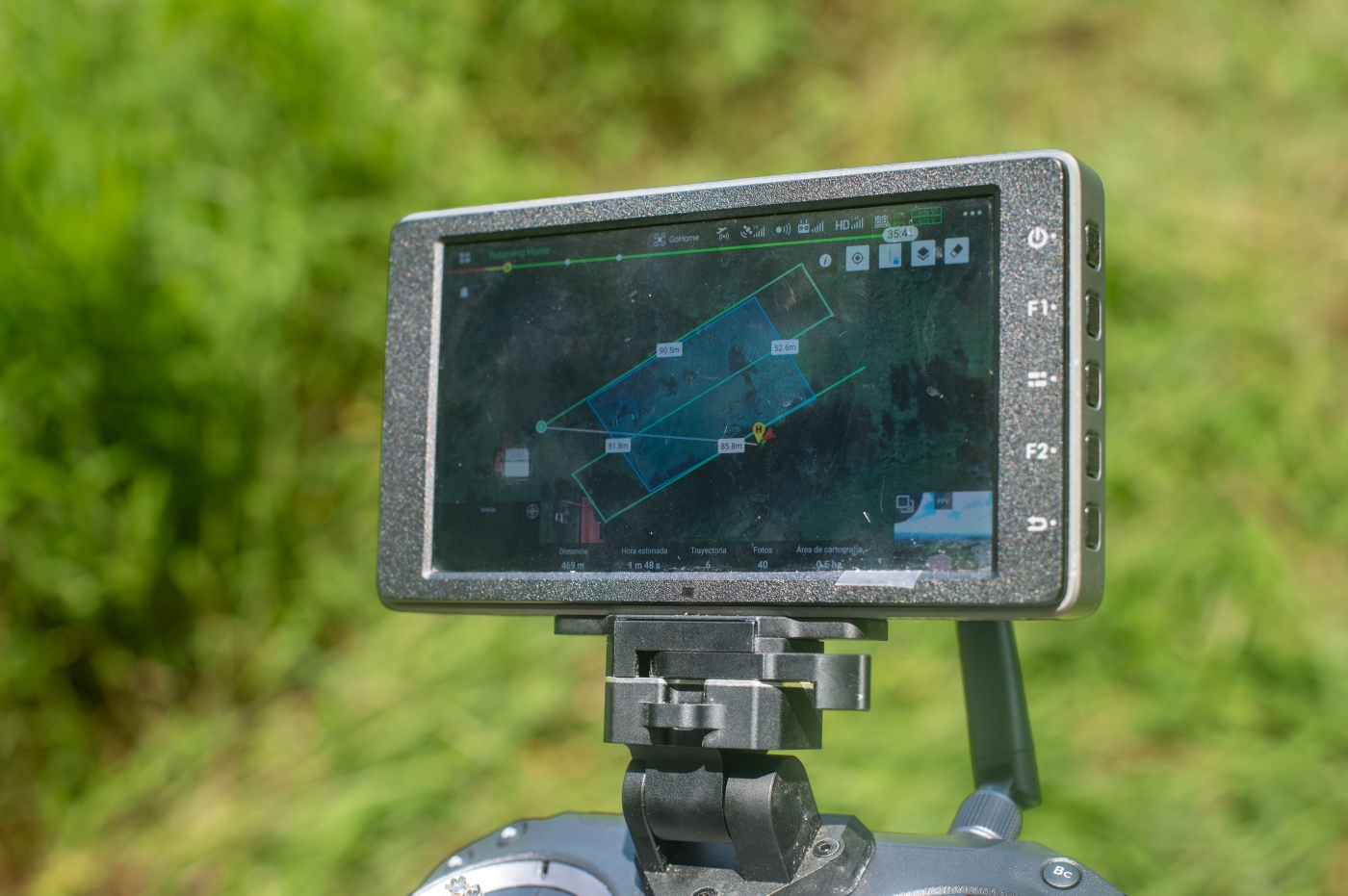
Amid laughter and an atmosphere of curiosity, the 15 seventh-grade students head out to the field near their classrooms, accompanied by their teachers—Eduardo and Ifeoma Cynthia—who are also learners. One group of students focuses on marking waypoints with the handheld GPS, while the other uploads the flight plan to the drone. The hum of the aircraft rises as the exchange of knowledge transforms both those who teach and those who learn.