EARTH University and Costa Rica’s National Institute for Innovation and Transfer of Agricultural Technologies (INTA) have strengthened a long-standing relationship with a shared goal: generating knowledge, training leaders, and contributing to the development of the country’s agricultural sector. This collaboration, which was established over many years through joint work and technical exchange, was formally formalized in 2025 with the signing of a framework cooperation agreement.
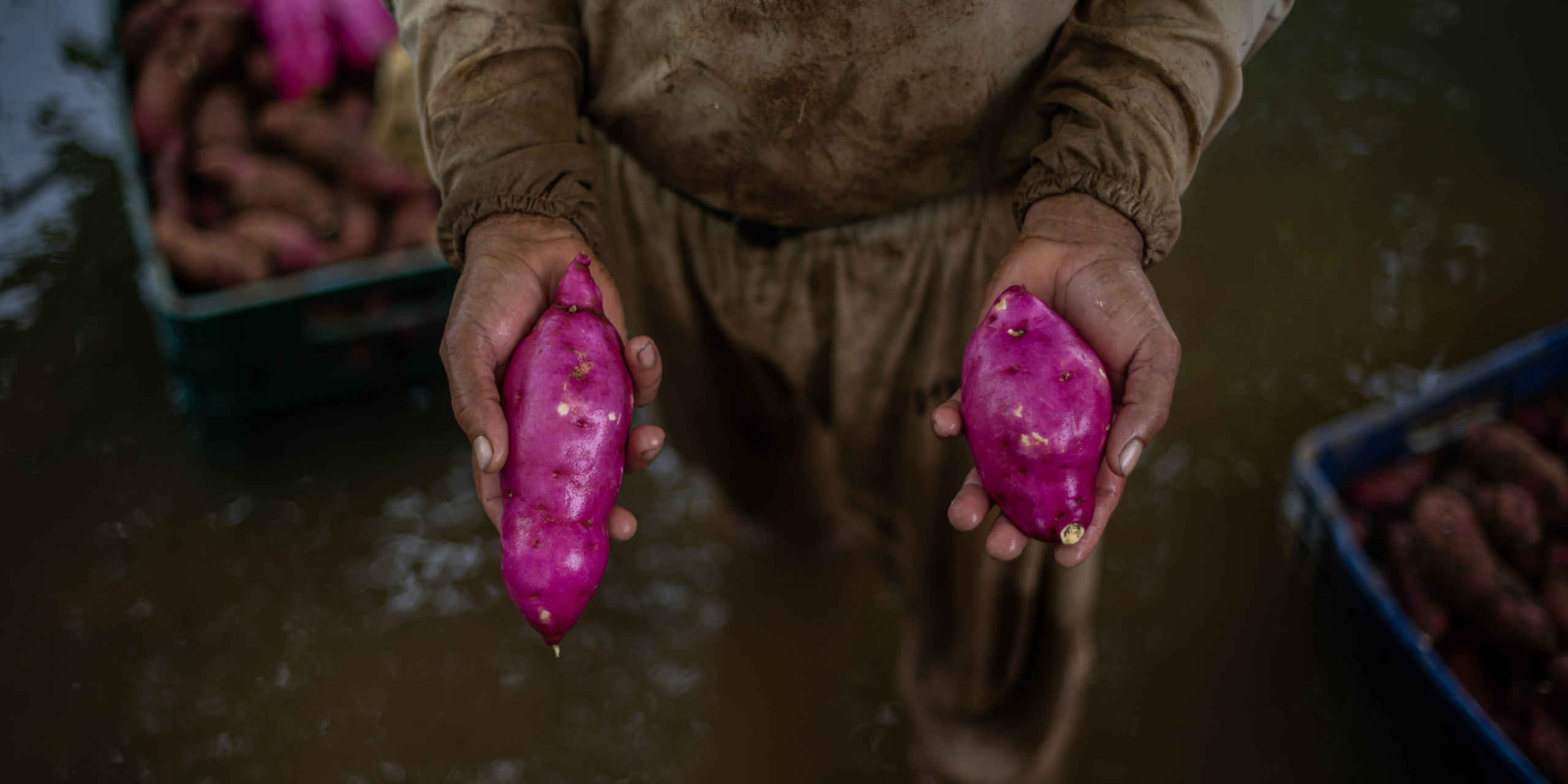
The partnership is structured in phases and implemented through specific agreements that allow research to focus on particular crops and objectives. The first joint project focuses on sweet potato (also known as yam), a crop with high productivity and industrial potential. While INTA leads the agronomic development on its farms, EARTH contributes its expertise in agro-industrial processing through its Food Processing Laboratory, where products such as flours, chips, and other derivatives have been developed, demonstrating the added value of different varieties.
A second specific agreement, corresponding to phase two, is scheduled to be signed in 2026 and will focus on potato cultivation. Due to the agroecological conditions of the Caribbean region, this crop is not produced on the University’s Guácimo Campus. Therefore, the logistical model used for sweet potato will be replicated: INTA will be responsible for crop production, while EARTH will handle post-harvest management and agro-industrial processing. For other potential phases focused on crops such as papaya, plantain, guava, and rambutan, there is the possibility of conducting research from the production stage within the University’s property.
The alliance has also made it possible to recover areas dedicated to non-traditional fruit crops at EARTH, thanks to INTA’s support through the provision of plant material from its nurseries. Recovered crops include arazá, star fruit, acerola, and other species that for various reasons were no longer present on the Guácimo Campus.
Beyond research, this partnership has a strong educational component. INTA opens its experimental stations to host EARTH students, facilitates academic field trips and research opportunities for Graduation Projects, and supports courses such as Work Experience, which bring students closer to the institutional reality of the country. In addition, faculty and staff from both institutions have had access to training opportunities and research resources. This exchange is based on mutual learning and cooperation that values what each party knows and contributes.
The relationship is also reflected in the leadership of EARTH graduates who currently hold various positions within INTA, making joint work more fluid and collaborative, with a shared vision of the importance of research, innovation, and knowledge transfer for agricultural transformation.
“The more institutions work together in agricultural innovation and technology transfer, the greater the impact on territories and on those who produce our food. Research only becomes meaningful when it is shared and applied,” said Mauricio Segura, Director of Academic Administration at EARTH.
Through this alliance, EARTH and INTA reaffirm their commitment to a more innovative, collaborative agriculture that is closely connected to Costa Rica’s real needs. We hope this partnership continues to grow and endure, positively impacting food systems.