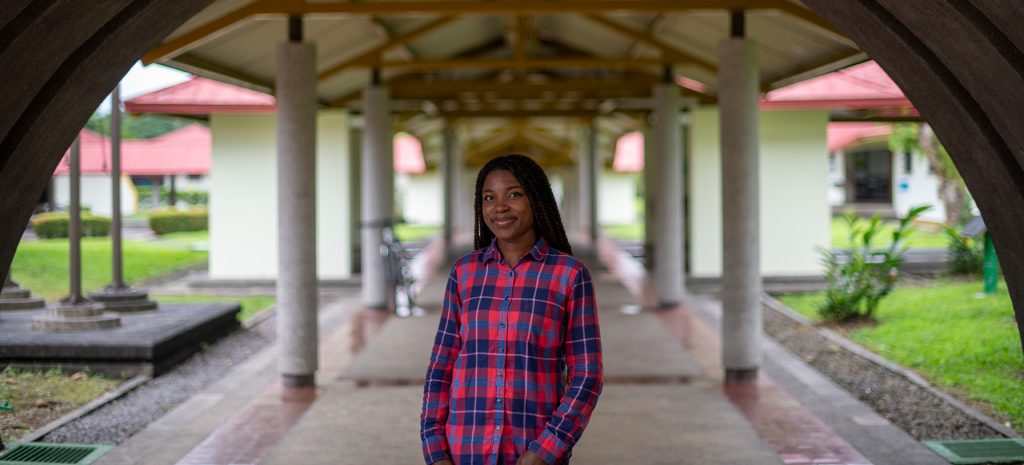
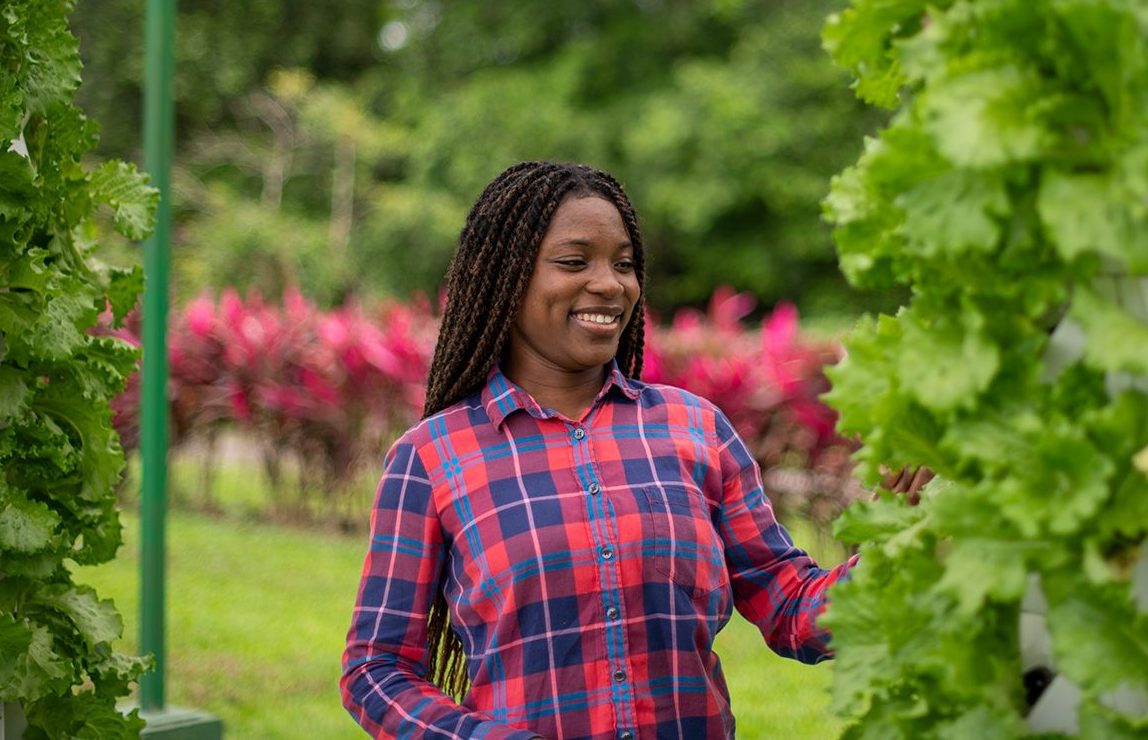
The day before she was admitted into EARTH, Maken Love Mallebranche (Class of 2027, Haiti) had a dream that she had received both good and bad news. At that point, she had spent seven years of her life applying for university scholarships inside and outside her country. Her dreams were reflecting the anxiety of so many years of waiting for a letter, a call, or an email with a definitive answer. An answer that could change the course of her life.
She had not been wasting any time during those seven years. Because her father had passed away, Maken, being the eldest in a large family, devoted herself to working to help her mother and siblings. She worked hard but never lost sight of her goal of becoming a professional in the field of agriculture.
Maken’s passion for agriculture began when she was very young, when her father and grandfather took her to the fields and showed her how small seeds could grow into beautiful green plants, plants that could bear sweet fruits or fresh vegetables that they would eat together as a family. She learned to be observant and patient, watching how over time, little by little, her plants grew. Witnessing the transformation of seeds into fields full of crops gave her a vocation and a dream.
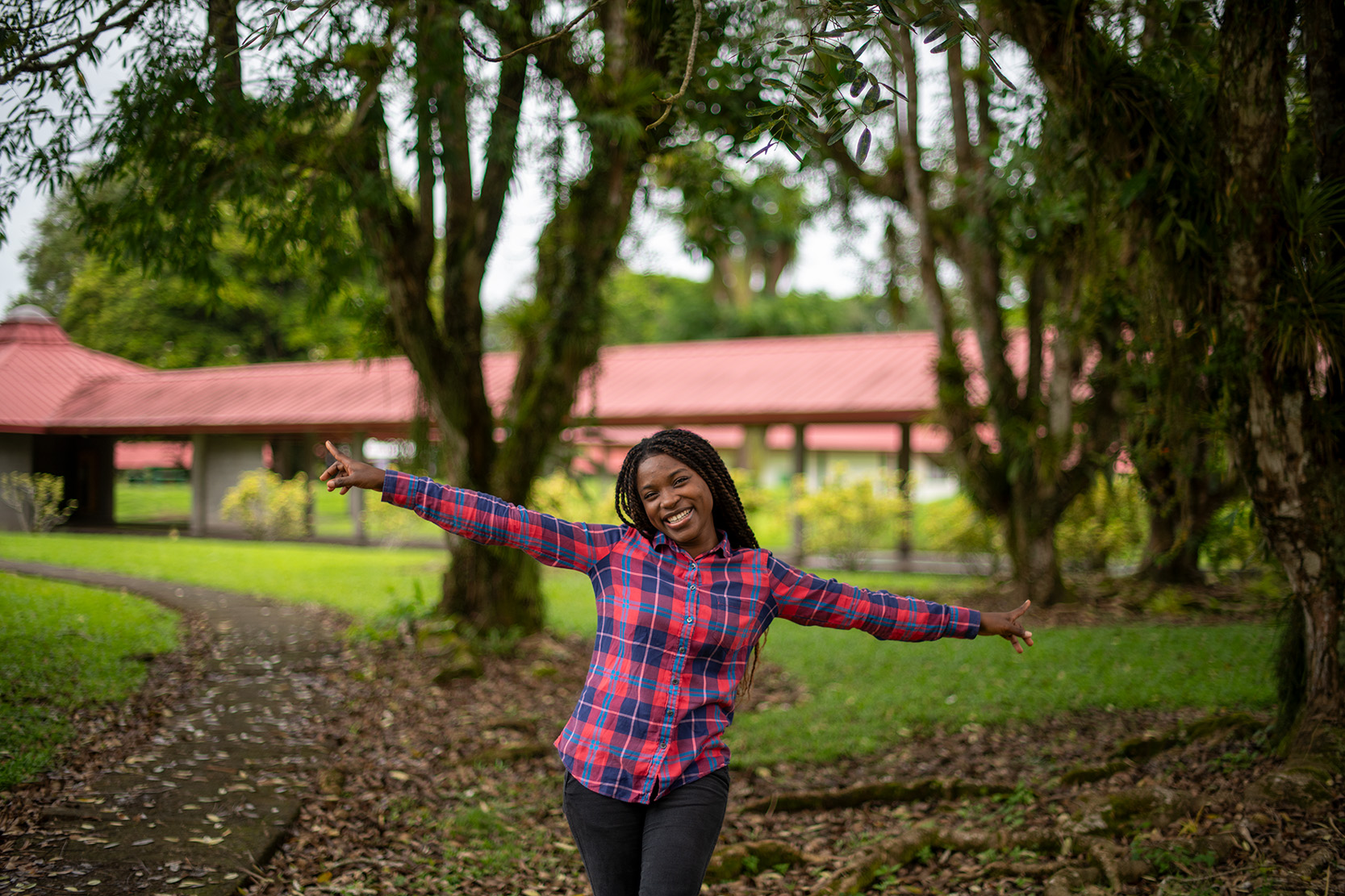
She also realized at an early age how difficult farm work and marketing agricultural products could be, especially in a country like Haiti, which faces the consequences of climate change, constant earthquakes, and political instability that has caused waves of violence and insecurity. Maken wanted to be part of the change, even if only through small actions. She wanted to support her mother, who was selling products such as bananas and passion fruit at a local market, and other small producers who did not have access to fair incomes and were subsisting on minimal resources, many of them living in extreme poverty and with high levels of malnutrition.
One day, shortly after she had the dream, Maken received bad news: she had been rejected by one of the universities she had applied to. She wanted to believe that her dream could come true and that she would soon receive another call. And it happened. When they told her, “You have a place at EARTH,” she could only say thank you, thank you, thank you, until she was speechless, holding back her joy and tears.
Saying yes to EARTH was easy, but what came next was fraught with fear. To get to the University, she had to travel to Port-au-Prince, the capital of Haiti, and leave the countryside in the midst of constant political conflict. On the roads, buses were stopped by armed groups, and attacks had been reported in the days leading up to the trip. When it was time to leave, her farewell to her mother and family was brief and emotional, and although everyone was afraid of what might happen along the way, they supported her; she had spent many years waiting for an opportunity like this. During the journey, she tried to maintain her composure, and she was guided by the certainty that this was her moment. And it was.
Today, as a third-year student, Maken is not only thinking about graduating. She is thinking about returning home. She dreams of restoring the mangrove swamp and beach near her community, which have been badly affected by poor practices and a recent earthquake. She knows that restoring this ecosystem is not only an environmental issue, but also an economic one: many families depend on fishing and the trade that is generated around the coast. She also wants to promote school gardens and environmental education programs so that children and young people understand the value of the land from an early age, as she did with her father and grandfather. She believes that change begins locally, by listening to the residents, understanding their real needs, and creating participatory and horizontal spaces.
In every classroom, farm, and experience Maken has at EARTH, she hears herself saying thank you, thank you, and thank you again. But now she doesn’t stay quiet or hold back. Now she grows like the plants she sowed as a child: strong and ready to bear fruit.